

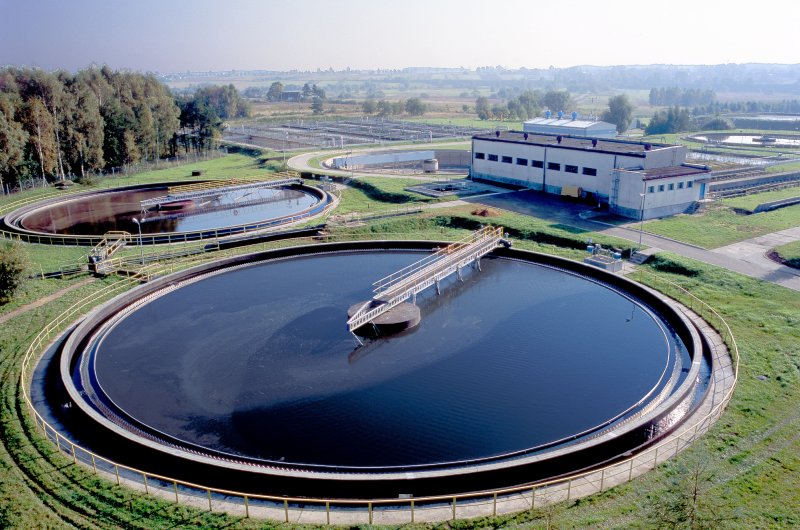
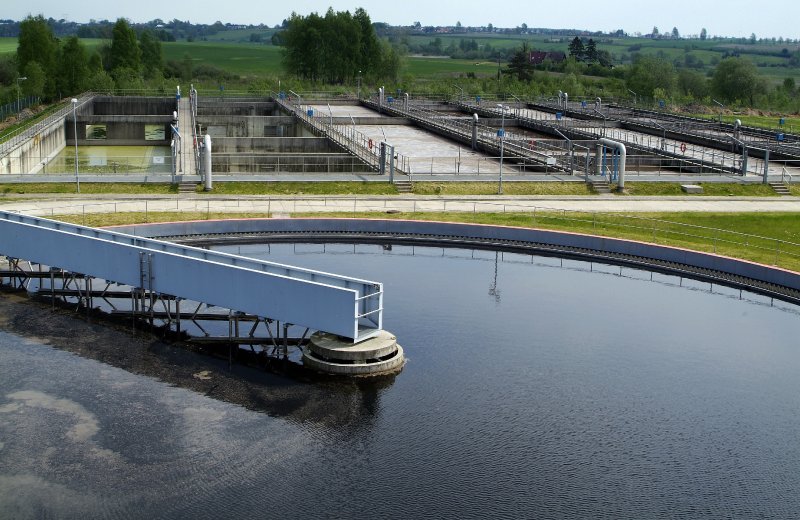
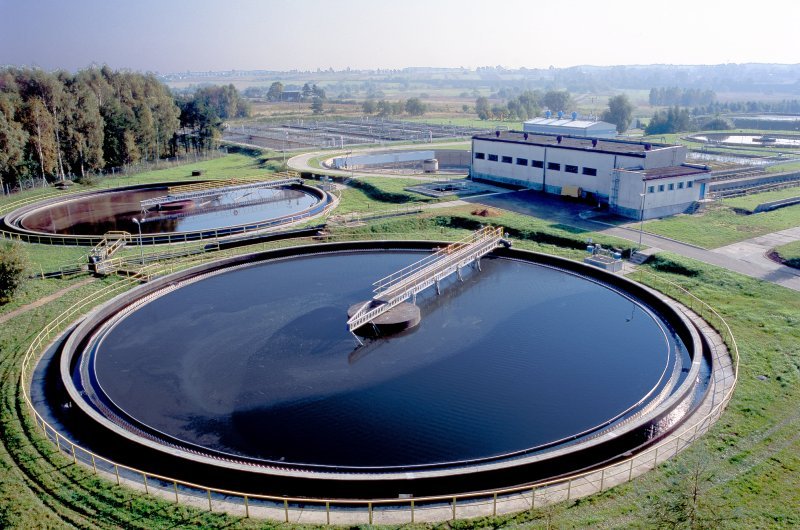
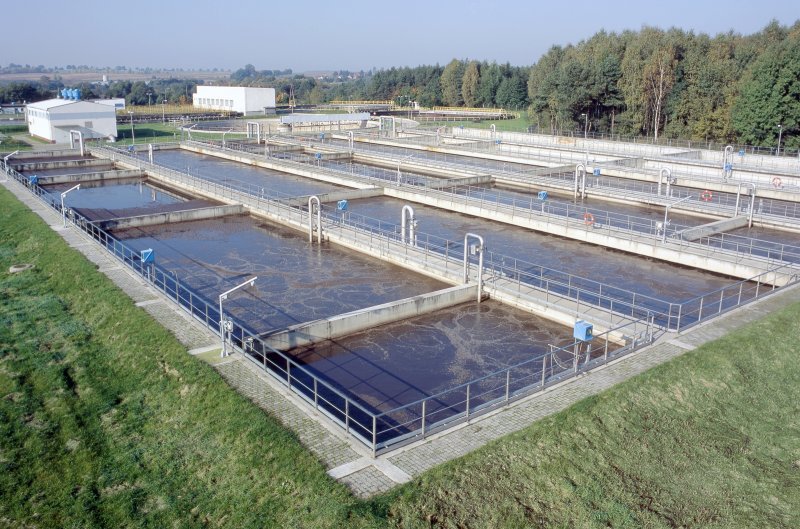
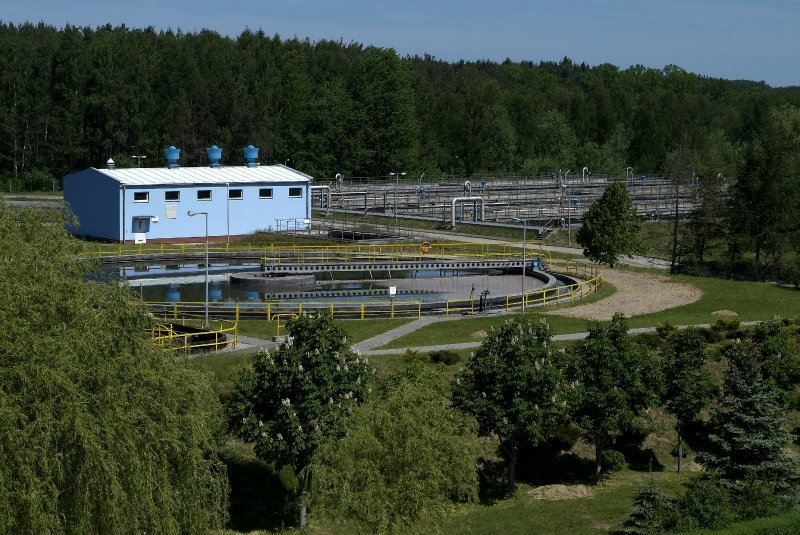
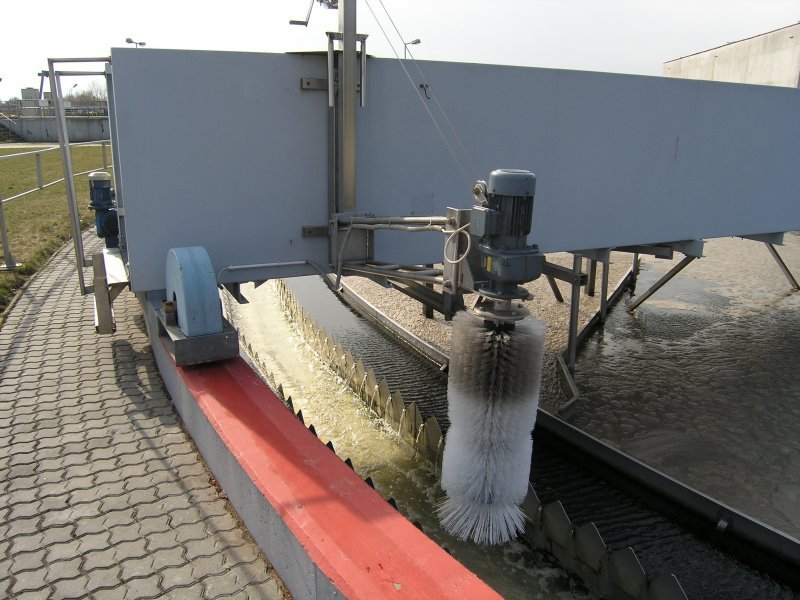
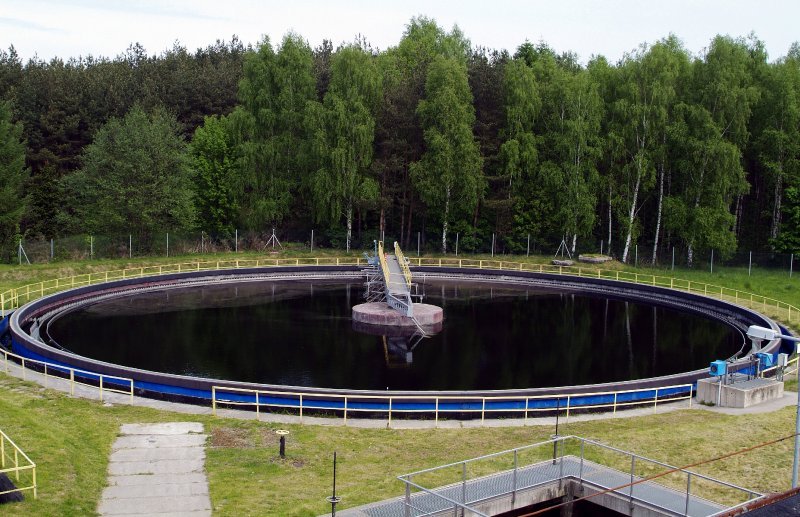
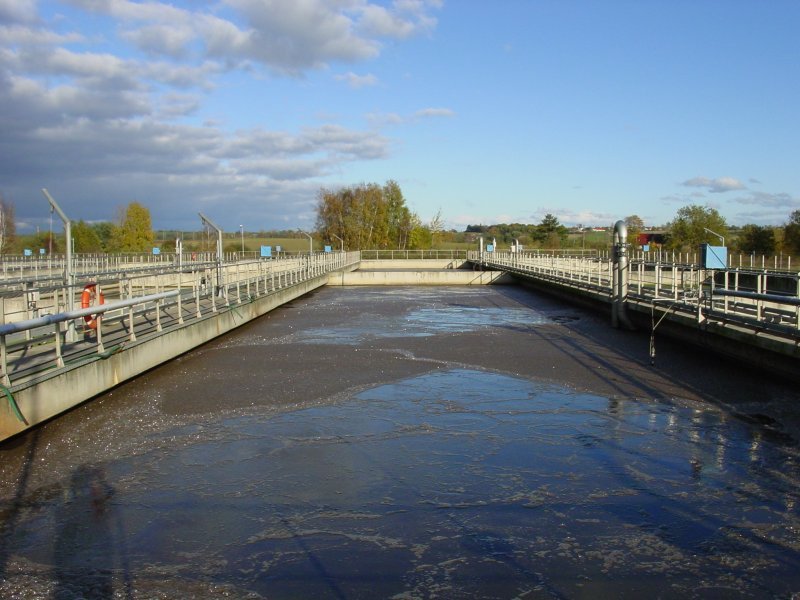
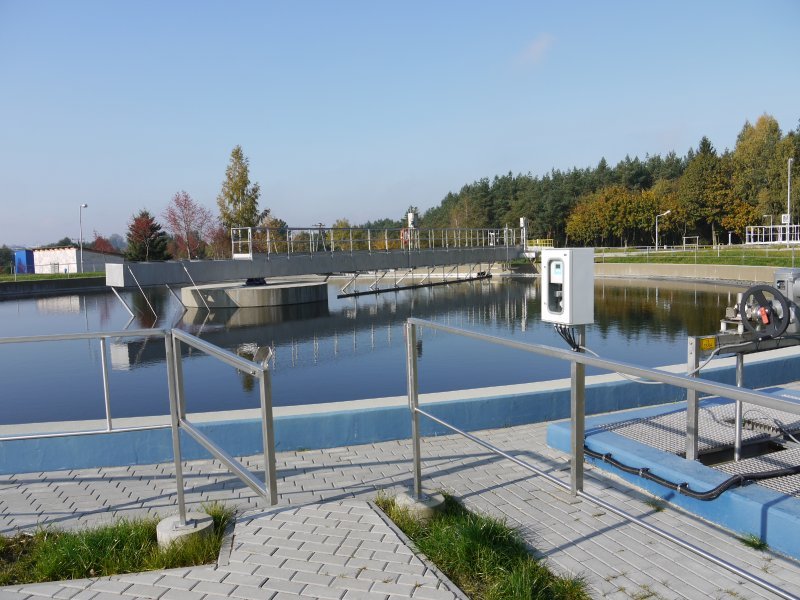
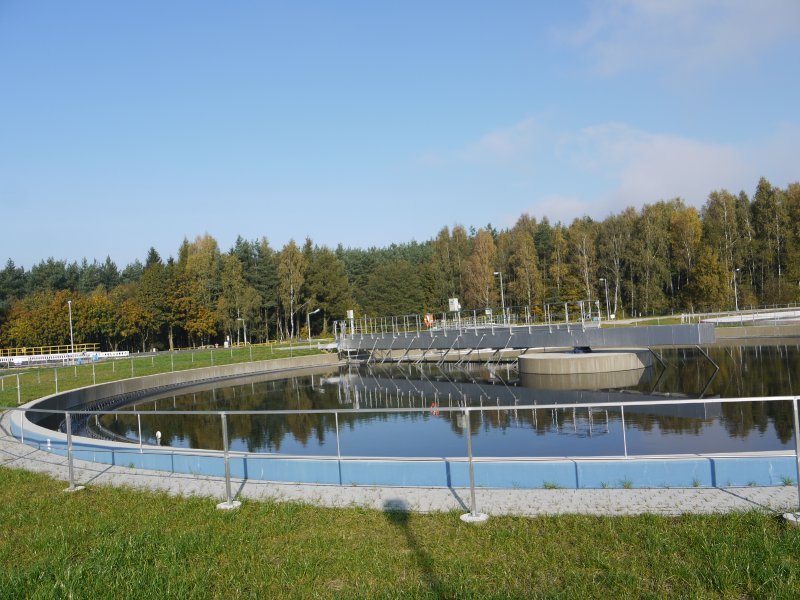
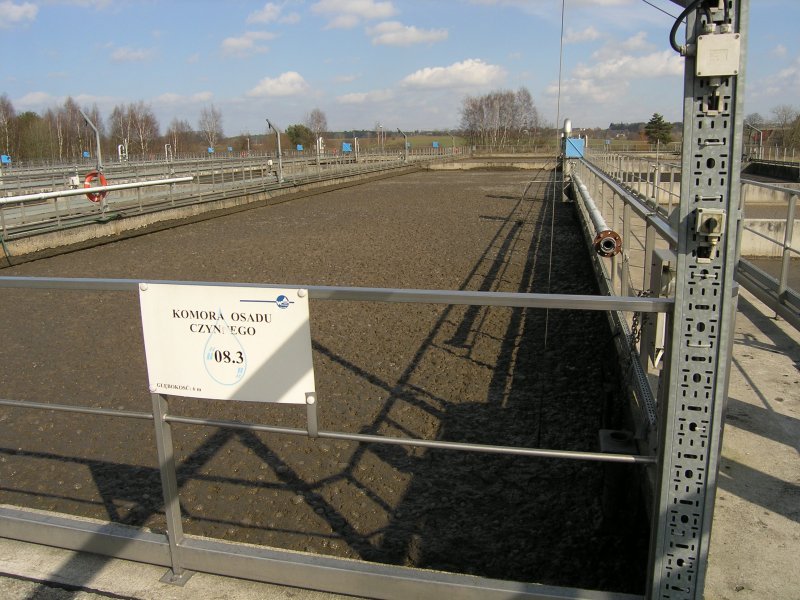
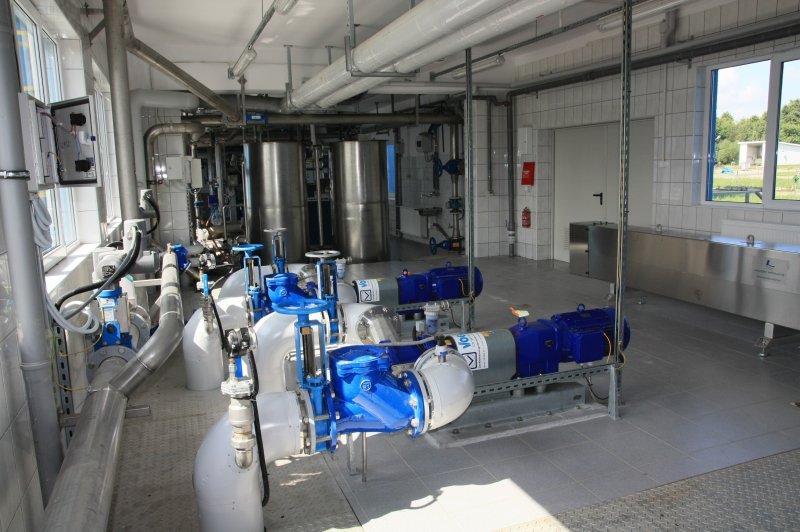
The Wastewater Treatment Plant in Słupsk treats wastewater from the City of Słupsk and the neighboring municipalities of Słupsk and Kobylnica. It operates as a mechanical-biological treatment plant designed for advanced nutrient removal through a modified, three-phase Bardenpho process, supplemented by a pre-denitrification tank. The plant’s pollutant load capacity corresponds to 200,000 PE (Population Equivalent), with an average daily flow rate of approximately 19,647 m³/d.
The Słupsk treatment plant is a thoroughly modernized facility, commissioned in June 1998 following a comprehensive reconstruction of its wastewater section, while investment works concerning sludge processing were completed in 2010. This investment was carried out as part of the “Water and Wastewater Management Program in the Słupsk Region” – a project co-financed by the EU Cohesion Fund. It enabled a higher reduction of sludge volume – achieved both by reducing organic matter through stabilization and ultrasonic disintegration processes, and by increasing the removal of water bound within the sludge during dewatering processes. Consequently, this allows for the complete neutralization and utilization of the sludge in the composting process. This takes into account both the growth in sludge production (due to additional wastewater from neighboring municipalities) and the projected volume of delivered dissolved air flotation (DAF) waste (fats/greases), which poses a significant waste problem in the Słupsk region.
In 2015, “Wodociągi Słupsk” commenced the execution of another project co-financed by the Cohesion Fund under the Infrastructure and Environment Operational Programme 2007–2013, titled: “Sludge Management at the Treatment Plant along with the Modernization of the Sewage Network in the Słupsk Agglomeration.” The overarching objective of the Project is to enhance the capacity to accept and treat larger pollutant loads and to optimize the technological process at the wastewater treatment plant, specifically in the area of sludge management, alongside reducing gas immissions (including malodorous gases) into the atmosphere—thereby mitigating odor nuisances.
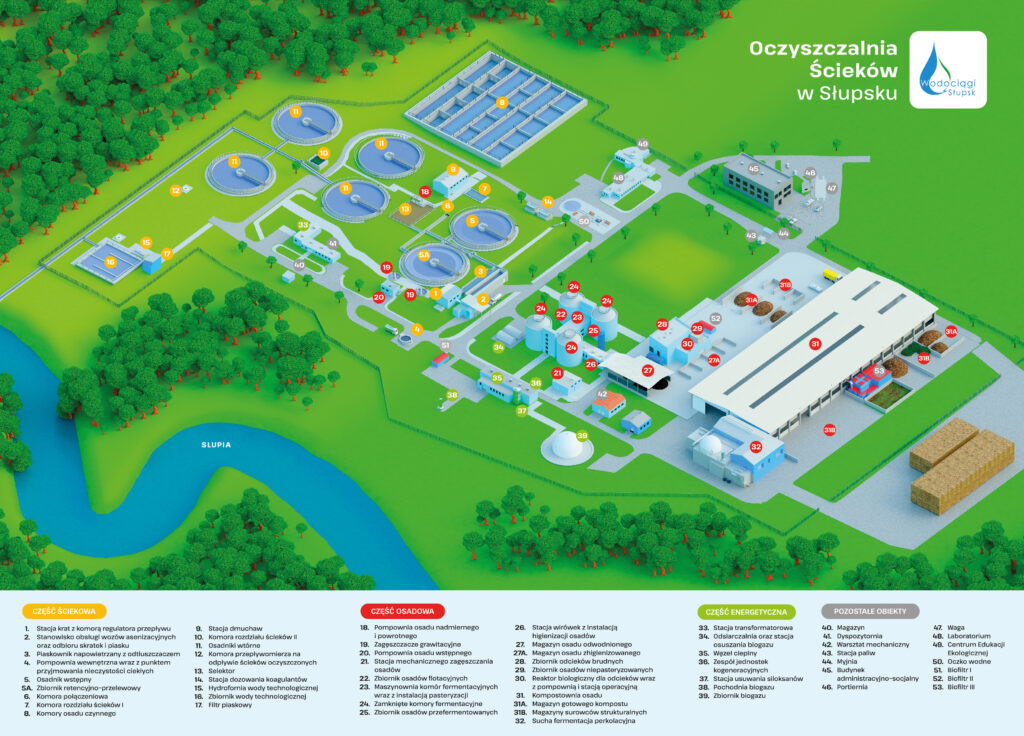
As a result of the Project’s implementation, the Słupsk wastewater treatment plant was expanded to include new facilities:
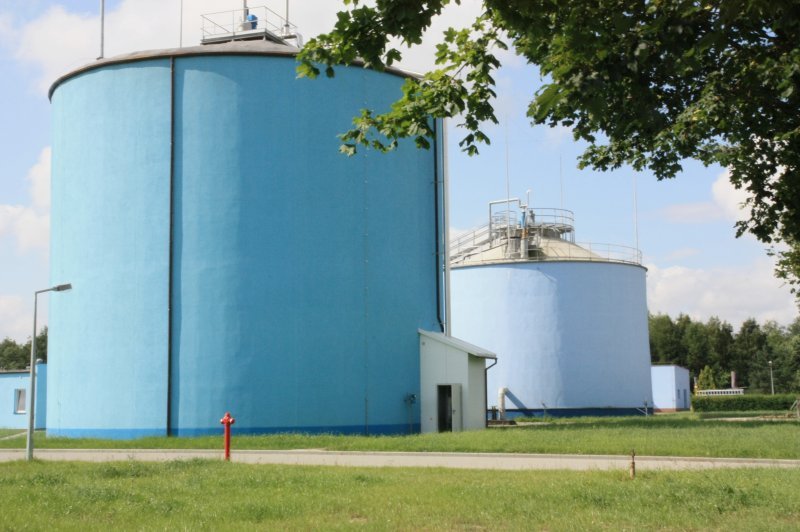
- a fourth anaerobic digestion tank (ADT) with a capacity of 2,500 m³;
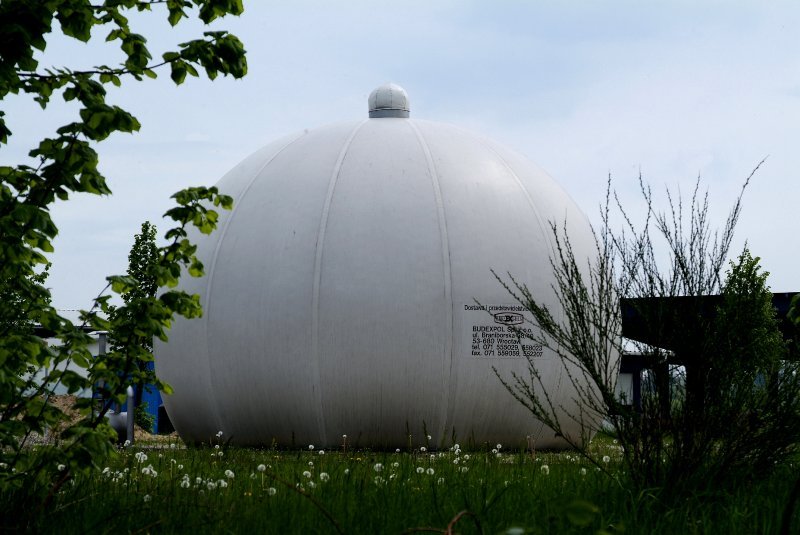
- a biogas storage tank with a capacity of 1,250 m³;
- a biological reactor for leachate treatment;
- a lime stabilization installation for dewatered sludge;
- a biofiltration system for the composting plant;
- a vacuum truck service station (SOWA).
Development Strategy of the Wastewater Treatment Plant in Słupsk
1. Zero-Emission Treatment Plant:
- Zero waste (organic recycling)
- Zero external utilities (self-sufficiency in water, heat, power, etc.)
- Zero odors
- Zero wastewater (water reclamation and commercial reuse of treated effluent)
2. Preference for biological methods
3. Utilization of alternative energy sources
4. Regional-scale operations
5. Ensuring process safety and security
6. Low capital expenditure (CAPEX) through rationally implemented investment models
7. Low operational expenditure (OPEX) through effective technical solutions and optimization programs
ATTENTION!
We kindly inform you that due to technical reasons and ongoing facility modifications, the Wastewater Treatment Plant in Słupsk will not accept grass cuttings in 2026. At the same time, the reception of branches remains unchanged.