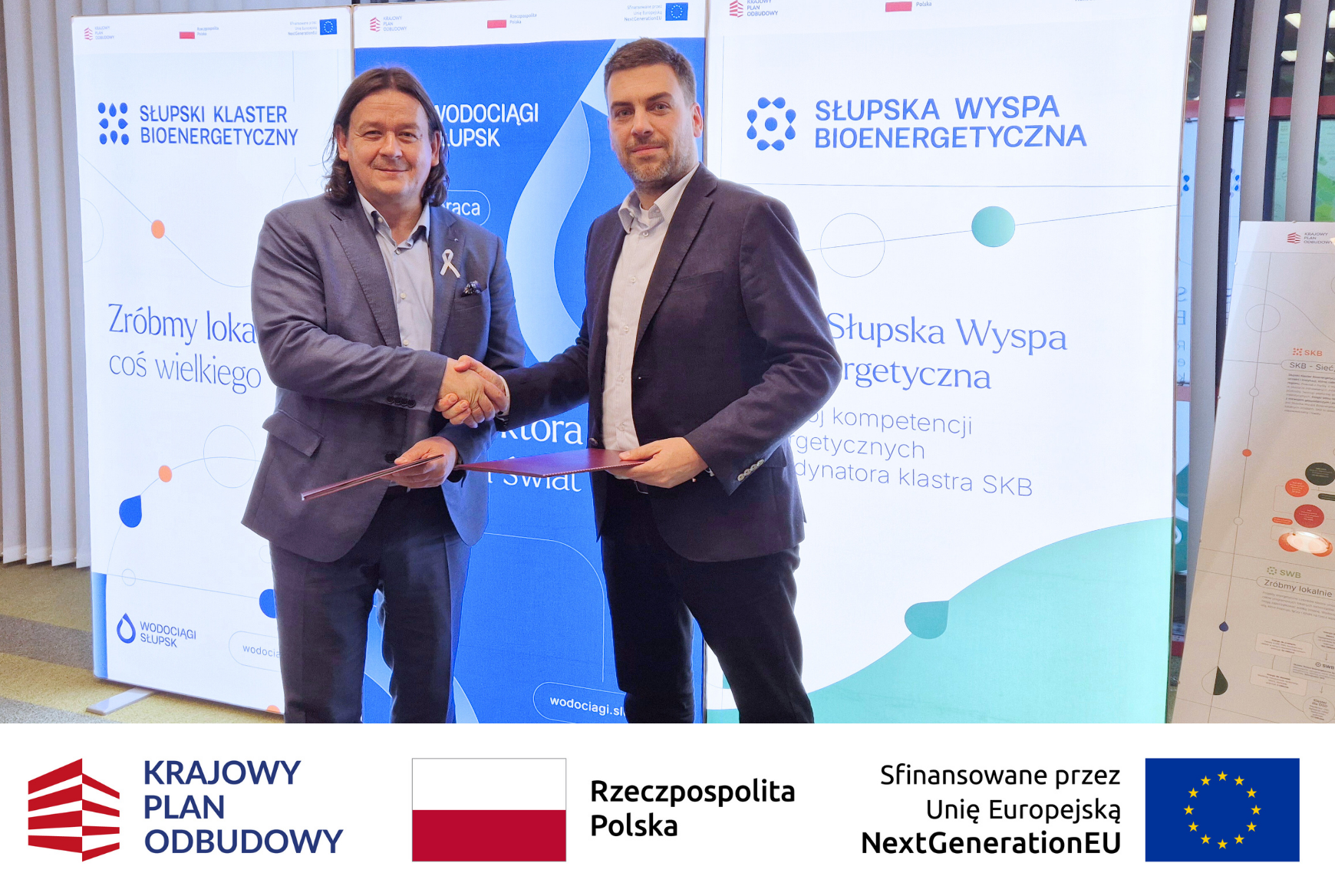



Agreement for Developing the Hydrogen Economy and Biomethane Development Concept in SBC Signed
(25.11.2025)
“Wodociągi Słupsk”, acting as the leader of the Słupsk Bioenergy Cluster (SBC), has signed an agreement with the company DOT ENGINEERING Sp. z o.o. based in Gdańsk. The contract covers the preparation of a detailed concept for the development of hydrogen economy and biomethane within the energy community of the Słupsk Bioenergy Cluster (SBC), alongside three functional and utility programs for the following investment tasks:
- Construction of hydrogen installations including the necessary storage and distribution infrastructure;
- Construction of an installation for upgrading biogas produced at the wastewater treatment plant to quality parameters that meet at least the minimum requirements for use in transport vehicles and cogeneration;
- Construction of the transport depot for the company “Wodociągi Słupsk”, which is intended to serve as a best practice model and a demonstrator for other cluster members in terms of organizing transport depots and servicing hydrogen and biomethane vehicles.
The studies currently being prepared are implemented under Stage II of the project entitled “Development of Energy Competencies of the Słupsk Bioenergy Cluster.” This project is covered by non-repayable support from the development plan under Investment B2.2.2/G1.1.2 of the National Recovery and Resilience Plan (KPO) – RES installations implemented by energy communities, Part A, and aligns with the long-term strategy of the Słupsk Bioenergy Cluster.
Biomethane and hydrogen are fuels that play an increasingly vital role in the energy transition. They can be utilized, among other things, in transportation and for stabilizing energy systems based on renewable energy sources.
The development of the hydrogen economy and biomethane development concept, along with the functional and utility programs, marks an important preparatory stage. It will allow for the assessment of technological, organizational, and economic feasibility for installing these systems, while preparing the project for subsequent implementation phases. Ultimately, these solutions will contribute to increasing the energy security of the region, reducing emissions, and ensuring the efficient use of local resources.